A Typical Business Management Simulation Game Flow


After the introduction, the teams familiarize themselves with the decision-making process via a practice round. The practice round results will not have any influence on the actual game results.
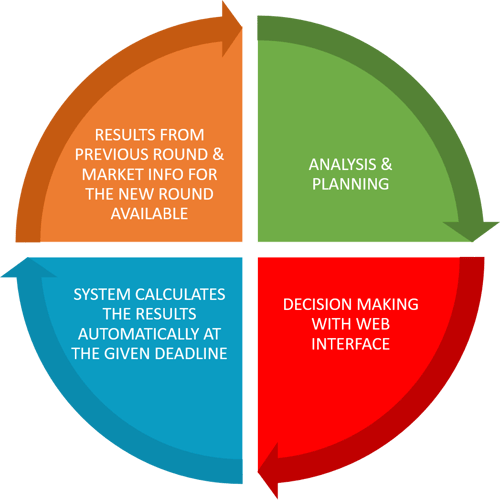
The instructor decides the number of actual decision-making rounds (5-12) (see the cycle below).
Each market consists of 3-12 teams, with 2-8 members in each. The number of parallel markets is not limited, making it possible to utilize the simulation for any number of participants.
All teams are starting from exactly the same position, with similar market shares and profits. Similarly, the teams will be faced by the same market conditions during the simulation.
It is notable that the teams compete against other teams in their own market, not against a computer. Each team’s decisions influence the result of other teams and the market development overall.